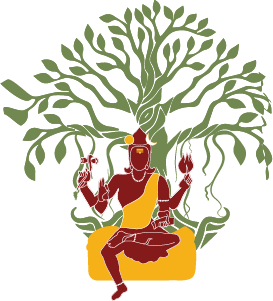
Advaita to Purnatvam – The A to Z of what we owe Adi Shankaracharya

Shata-koti pranamah, Bhagavatpada Adi Shankaracharya.
A hundred crore salutations at your feet.
Adi Shankaracharya lived for only 32 years — and yet the world he left behind is still the one we inhabit.
The vision of oneness for life, the stotras we sing, our Vedic way of life, our ways of worship, the Mathas that protect and serve seekers, the temples where we have darshan, the Ananda in our lives and the very framework by which we understand who we are — all of this carries the fragrance of his fingerprints and his ashirvaada flowing through channels of our lives.
On Adi Shankaracharya Jayanti today here is an attempt to share the A-Z of his contributions, an act of recognition, of gratitude as we seek his grace.
He is not someone we learn about. He is someone through whom we still see life and live it.
A — Advaita (non-duality)
We owe to him the teaching tradition that establishes the vision that ‘All that is here is One’ . The Atma, the self is not a fragment seeking wholeness but wholeness itself, undivided, untouched.
The waves appear different from each other while remaining water, all along. The experience of duality is not reality
Without him, we might have lived our entire lives as strangers to our own nature.
B — Bhashya (illuminating commentary)
His commentaries on the Brahmasutras, Gita, and ten Upanishads are the reason Vedanta remains a living tradition and not a collection of dusty manuscripts.
He was not the founder of Advaita Vedanta but a re-establisher of Advaita as he wrote down the oral teaching tradition which is followed to this day.
We receive the Shastra already lit. We owe him the lamp.
C — Chit (pure consciousness)
He revealed that consciousness is not a product of the brain or a quality of the mind or a part of oneself but the very nature of the Atma — self-luminous, ever-present.
A simple insight of “I am the witness, not the witnessed” and hence what is witnessed can never affect me, flows from his teaching.
What one is, is not subject to birth or death. One always Is — he led us gently and firmly to this knowledge.
D — Dashanami Sannyasa (the ten-name monastic order)
He gave Sanatana Dharma an institutional framework — four Mathas at the four cardinal points of Bharatavarsha, and ten distinct orders (Saraswati, Bharati, Puri, Tirtha, Aranya, Ashrama, Giri, Parvata, Sagara, Vana) organising the Sannyasis thus anchoring the tradition geographically, spiritually and militarily.
The monastic highways of Dharma run through roads he built.
Every Swami/ni who has taught us, every Matha that has sheltered and blessed – seekers receive because of his organisation
E — Ekatmata (the oneness of all)
He showed us that the kindness and compassion we feel for another is not mere sentiment — it is recognition of the sacred thread of oneness that binds us all. “Sarvam khalu idam Brahman.” All that is here is indeed Brahman, the limitless.
The way of Sanatana Dharma of living a life of interconnectedness is based on this vision and the foundation he strengthened. Hence, we can connect with and pray to trees, rivers, mountains, people and no one bats an eyelid.
Our ability to see the sacred in the stranger is a debt we owe to his teaching.
F — Foregrounding Jnana (restoring the path of liberating knowledge)
When ritual had eclipsed inquiry and karma had overshadowed viveka, he fearlessly re-centered the tradition on Jnana as the direct means to Moksha. He did not reject karmas, meditations or ritual — he revealed its proper place in the larger journey.
That we still ask “Who am I?” as a serious philosophical question — that is his doing.
G — Guru-Shishya Parampara (the sacred teacher-student lineage)
He embodied and perpetuated the guru-shishya relationship as the living vessel of Vedantic transmission.
As a disciple of Govindapada and guru to Padmapada, Sureshvara, Hastamalaka, and Totaka — he kept the flame alive and taught us how it must be passed on.
Every sacred relationship between teacher and student carries his blessing.
H — Hymns — Stotras (devotional poetry of the highest order)
He strengthened loving devotion, bhakti by giving us rich, punya-generating gifts that give to this day – Stotras such as Ganesha Pancharatnam, Shivanandalahari, the Soundaryalahari, the Dakshinamurti Stotram, Subramanya Bhujangam, Achytashtakam, Nirvana Shatkam, Bhaja Govindam and the list foes on.
Through his life, he showed us that the jnani’ is the most exalted bhakta, devotee. (Gita 7.16-18)
That we can sing our love and the highest truth which moves us to tears — is a gift he gave us.
I — Ishvara (the Lord as Saguna Brahman)
He showed us that this world is a manifestation of Ishvara and that Jagat darshanam is Ishvara darshanam is Atma Darshanam. (premise of my upcoming to be published book)
Seeing the world as a form of Ishvara sanctifies our vision, strengthens our connections with all and helps us to fulfil our sacred debts to Devatas, Pitrs, Rishis, Bhutas, Manushyas.
We can pray with all our heart and inquire with all our mind — both are valid, both are honored — because of how he held this together.
Our ability to love Shiva and know his true nature as oneself — that progression in our maturity is his contribution.
J — Jivanmukti (liberation while living)
He presented liberation not as posthumous reward or going to svarga after death but a present reality — that a human being, in this very body, in this very life, can abide as Brahman.
This transforms everything about how we relate to sadhana, the means for the Sadhya, the goal.
The vision that Moksha is available here and now, not later — we owe him this clarity.
K — Kaivalya (aloneness as fullness)
He showed that the Atman is kevala — alone, complete, lacking nothing. There is no second to relate to or connect with.
Our modern restlessness — the relentless search for completion in objects, relationships, achievements — finds its cure in the vision he gave us of the self as already whole and all forms as manifestations of the Atma.
He showed us that Kaivalya is not a result of any Karma, however exalted but karma indeed has a role in building emotional maturity.
How liberating for different waves to relate to each other knowing that they are one water!
Every moment of connection and contentment points back to the vision he articulated.
L — Lakshana (the method of implied meaning)
His reverential enquiry of hermeneutics — particularly the jahad-ajahad-lakshana applied to mahavakyas like “Tat tvam asi” — gave us the tools to understand the power of words with both precision and depth.
He showed that sacred language works differently from ordinary language.
That we can sit with a single line of the Upanishad for a lifetime and find an inexhaustible joy— that is his gift.
M — Mithya (dependent reality, neither real nor unreal)
He gave us a way to live in the world without being imprisoned by it. The world is not an illusion to be dismissed — it is a reality whose being depends on Brahman.
This allows us to act fully and love deeply, while remaining inwardly free.
Our ability to be in the world but not of it much like a lotus who blooms where it is planted and remains untouched— that freedom is his legacy to us.
N — Nirguna Brahman (the attributeless absolute)
He upheld the vision of the Upanishads of the ultimate — that Brahman cannot be reduced to a deity with preferences, moods, or favoritism.
He helped us see that ‘Saguna’ or ‘Nirguna’ are not two entities but words used in a context and are not opposed to each other.
The ocean with attributes is not opposed to the water that pervades it.
That we refuse to shrink the infinite to a finite form — that honesty is his influence in us.
O — Omkara (the sound-symbol of Brahman)
His bhashya on the Mandukya Upanishad Karika — structured around Om and its four quarters — gave us the most complete way of understanding our states of experience ever articulated: waking, dream, deep sleep, and the witness Turiya that pervades all three and is free from all three.
That Om is more than a simple chant – the depth of ‘Om’ he revealed.
P — Prasthanatrayi (the triple canonical foundation)
He established the Upanishads, the Bhagavad Gita, and the Brahmasutras as the three pillars of Vedantic knowledge as pramana, a means of knowledge — and then presented the oral tradition in a written form. This structured the entire framework of Vedantic study that we still follow today.
The very syllabus of our Vedanta study and sadhana is one he designed and blessed us with.
Q — Questioning — Jijnasa honored (the sanctity of sincere inquiry)
Reflecting the mode of dialogue in the Upanishads to teach, he modeled a Bharat, where questioning was not heresy or blasphemy but the highest act of devotion.
His debates — with Mandana Mishra, with the Mimamsakas, with the Buddhists — showed that truth fears no question. He gave us the courage to ask and question knowing that confusion is the only way to clarity.
That a reverential spirit of enquiry is how the Veda must be approached is his gift to us.
R — Rishi Parampara restored (the unbroken lineage of seers)
At a time when the Vedic lineage was fraying under the weight of sectarianism and foreign philosophical influence, he walked across Bharatavarsha — literally, on foot — and stitched the tradition back together through his teachings of the Shaastras. The continuity of the Rishi lineage today is, in part, his weaving.
That the thread connecting us to the Rishis was not cut — he is among those we must thank.
S — Shanmata (the six-fold synthesis of worship)
He held Shaiva, Vaishnava, Shakta, Ganapatya, Saura, and Kaumara traditions as six valid upasana paths to one Brahman — not competing paths thus cutting through the childish notion of ‘My devata is better than yours’.
A unified approach of seeing the worship of all devatas as valid and complementary approaches to the same infinite is a living inheritance. Our mandirs at home reflect this.
That Hindus across different sampradayas and traditions can recognize each other as fellow travelers on the same path — that integrated vision is his gift.
T — Tat tvam asi (“That thou art”)
His presentation of this mahavakya from the Upanishad — that the apparent individual is not separate from the ultimate reality — remains the most transformative shortest sentence in human history, and he made it accessible.
That this short sentence makes the biggest impact in our lives — we owe that to how he lit up the meaning.
U — Upadesha Sahasri (A Thousand Teachings of liberating knowledge)
His Upadesha Sahasri — the Thousand Teachings — models the sacred art of Vedantic teaching: how a teacher sees the student’s confusion, meets them where they are, and guides them step by step to the recognition of their own nature. Every good teacher today walks in his shadow.
Every moment a teaching has landed and changed us — that methodology was shaped by him.
V — Vivekachudamani (the crest jewel of Viveka, discernment)
In 580 verses, he traces the full arc of the spiritual journey — from confusion to clarity, from bondage to freedom. It is a companion for a lifetime of inquiry, as relevant today as it was then, helping countless seekers.
That we have a map of the inner journey this detailed and this compassionate — we owe him that.
W — Way of Life — Sanatana Dharma shaped (a way of living shaped by wisdom)
He shaped not only the vision but culture — the way Hindus approach death, the meaning of pilgrimage, the purpose of puja, the value of sannyasa etc etc.
The culture that shapes us today was itself shaped by him.
X — Para — the beyond (that which transcends all categories)
He highlighted that the ultimate cannot be fully revealed because it is You.
He helped us hold the paradox that Brahman that is the Atma is both beyond, transcendent untouched by the forms and also that which pervades the forms.
Even Advaita, he acknowledged, is a raft across the river, to be left on the other shore.
That we do not mistake the finger pointing at the moon for the moon itself — he taught us that.
Y — Yoga — Sadhana Chatustaya (the fourfold inner preparation)
He gave us the complete preparatory framework — viveka, vairagya, shatsampat, mumukshutva — without which even the greatest teaching cannot take root. He correctly posited Yoga darshana, Vaidika karma and meditations as sadhana, means for purifying the mind and steadying it.
He taught us that liberation requires both a sharp intellect and a prepared fertile ground of values that have blossomed into a fragrant garden.
Our sadhana frameworks follow his blueprint.
The inner discipline and devotion that makes wisdom possible — he designed that architecture for us.
Z — Zero to Purnata — fullness that cannot be diminished
He lived only 32 years. By any worldly measure — almost nothing.
Yet he brought alive the truth of the Shanti mantra “Purnam adah, purnam idam” — that which is full remains full even after fullness has been taken from it.
His vision was of fullness. He gave everything in 32 years out of the fullness of his heart.

We are purna, full and grateful.
Shata-koti pranamah, Bhagavatpada.
To dwell on this list is to realize how Adi Shankaracharya lives in our lives everyday.
He is not just a figure we do ‘namah’ to, from a distance, once in a year.
He is the very framework through which we think, worship, inquire, and live.
The vision of oneness that is ours, the tradition we are grateful to have been born into, the language of inner life we take for granted — these are, in no small measure, his gifts.
The least we can do is remember.
The most we can do is live the teaching and preserve the teaching he gave his entire life to transmit.
Shata-koti pranamah, Bhagavatpada Adi Shankaracharya.
A hundred crore salutations at your feet.

1 Comment
Beautiful! How are you doing, Swaminiji?